Implantology
Implantology
On this page
A complete smile and a fully functioning row of teeth are crucial to quality of life. When a tooth is lost, it is important to replace not only the visible crown but also the invisible root. Dental implants offer an advanced, long-lasting solution modelled on nature.
Why dental implants?
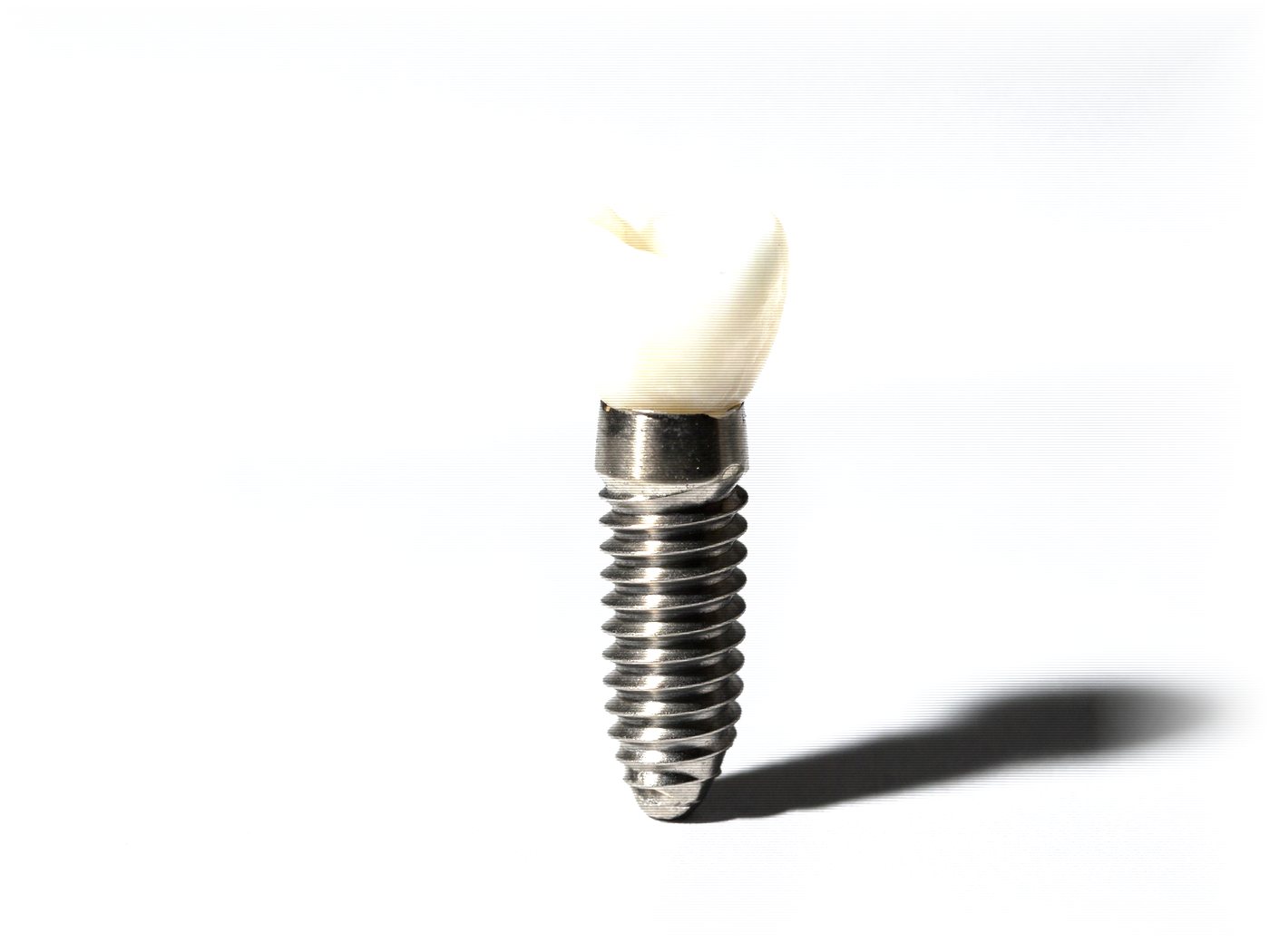
Natural teeth are firmly anchored in the jawbone – and this is exactly the principle that dental implants imitate. An implant replaces not only the lost tooth but also its root. The implant, usually made of biocompatible titanium, fuses with the bone and so provides a firm hold. This artificial tooth root offers the perfect foundation for the dental restoration that is later attached to the implant.
Unlike conventional bridges or dentures, no healthy neighbouring teeth have to be ground down or put under strain. Implants provide a stable, aesthetic and functional restoration that feels like a natural tooth – with no restrictions when speaking, eating or smiling.
The implant procedure
Treatment with dental implants takes place in several steps, which require careful planning and precise execution:
- Individual diagnostics and planningFirst, the jawbone is analysed precisely using state-of-the-art technology, often a 3D X-ray. This allows precise positioning of the implant and ensures the highest safety and accuracy of fit.
- ImplantationThe procedure itself is carried out under local anaesthetic. The implant is gently placed in the jawbone. In many cases this is a minimally invasive procedure with a short healing time.
- Healing phaseAfter placement, the implant needs a few months (usually three to six) to fuse completely with the bone. During this phase the bone grows around the implant and provides stable anchoring.
- Attaching the dental restorationOnce healing is complete, an individual crown, bridge or denture is attached to the implant. The restoration is matched to the natural teeth in colour and shape, so that no difference is noticeable.
Advantages of dental implants over conventional dental restorations
Compared with bridges and removable dentures, dental implants offer numerous advantages:
- Preservation of natural tooth substanceWhile healthy neighbouring teeth have to be ground down for bridges, they remain untouched with implants.
- Stability and comfortImplants sit firmly in the jaw and provide stable chewing and speaking function – no slipping or unpleasant feeling of pressure as with dentures.
- LongevityWith the right care, implants can last a lifetime.
- Natural appearanceDental implants are hard to tell apart from real teeth and blend harmoniously into the dentition.
- No bone lossThe jawbone stays active through the load on the implant and is not broken down as it is with dentures. This preserves the natural shape of the face.
- No restrictionsImplants allow unrestricted chewing, speaking and smiling, without fear of a loose dental restoration.
Dental implants are possible even with little bone
Even when the jawbone has already receded, implantation is often still feasible. In many cases the bone can be rebuilt through targeted measures such as bone augmentation. This ensures that the implant remains stably anchored in the jaw in the long term.
Frequently asked questions and individual advice
Every dental situation is individual, and the decision for an implant should be carefully considered. In a personal consultation, all open questions can be answered and a treatment plan tailored to your needs can be drawn up.
If you are looking for a lasting, comfortable and aesthetic solution for missing teeth, dental implants are an excellent choice. Book an appointment at our practice in Krefeld and get comprehensive advice!